Sagitta
Continuity
Engine
Public-surface authority intelligence for protocol continuity. SCE maps public authority paths, incident patterns, threat families, and evidence gaps so protocols can understand what may break before it becomes an emergency.
The engine behind continuity decisions.
SCE ingests public incident and advisory data, maps project authority surfaces, detects public owner/admin evidence, and powers reports, dashboards, and public proof surfaces.
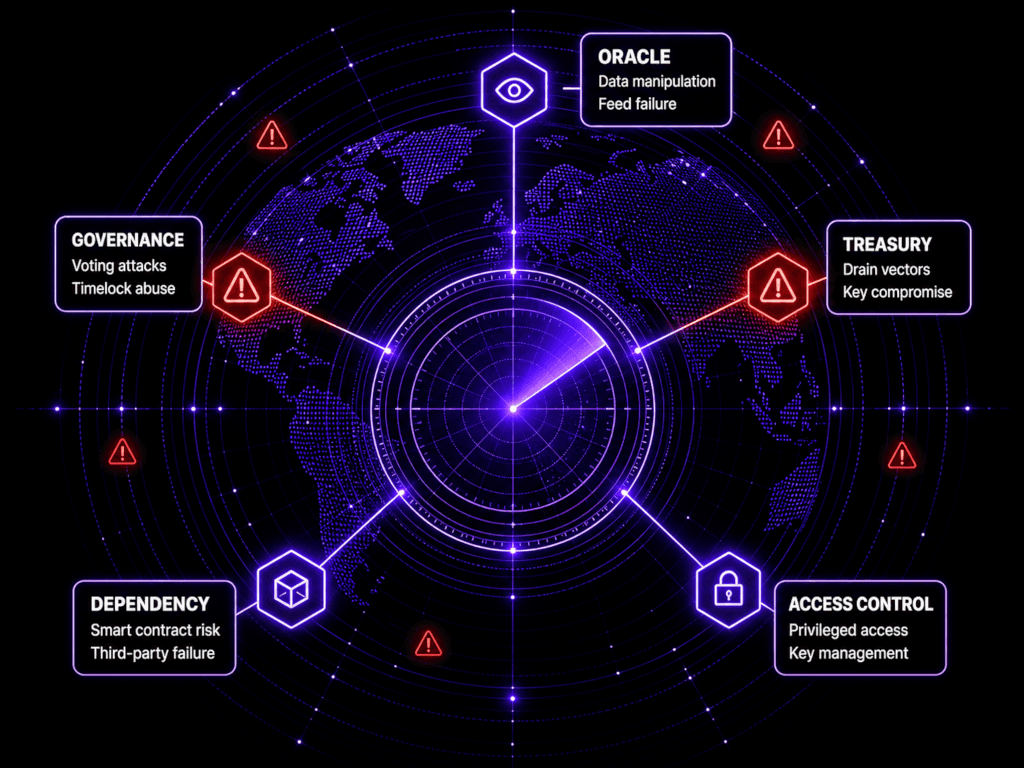
Every protocol has a threat matrix. Most teams only see it after the incident.
SCE exists for the moment assumptions stop being true. When a chain halts, an oracle drifts, governance freezes, a treasury path fails, or a critical authority surface becomes unsafe, continuity becomes authority.
Why SCE vs. an audit
Audits review code. SCE reviews whether the system can survive control failure.
- Code exploitability review
- Contract-level vulnerabilities
- Implementation flaws
- Best once contracts are near final
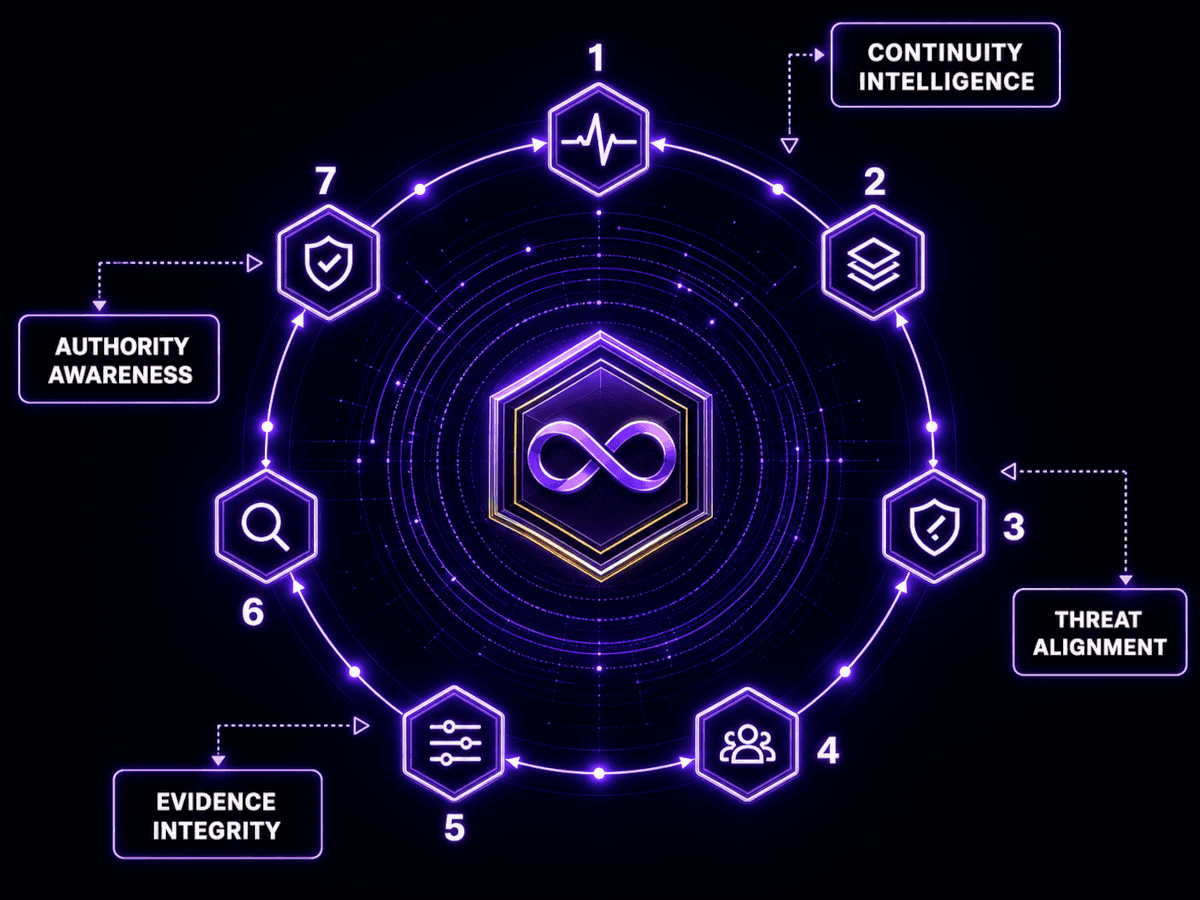
When the threat-matrix
event happens, SCE is
already holding the map.
Built for multi-chain protocol defense
Coverage begins with EVM authority-surface reviews and expands through chain-specific adapters.
SCE supports ecosystem-wide readiness programs — authority-risk mapping, control identification, and evidence preparation — before capital scales.
Discuss ecosystem coverage →
Sagitta Defense Review
A protocol continuity review
powered by SCE.
A protocol continuity review that turns SCE authority intelligence into a client-ready report. Defense Review is one output of the engine, not the engine itself.

- Case Library
- Threat Matrix
- Admin Surface Scanner
- Authority Path Mapping
- Evidence Reports
- Defense Review service
- More SCE-powered services to come
- Public research proof surfaces
- Dashboard intelligence
- Evidence status views
Frequently asked questions
Clear answers for teams evaluating the Sagitta Continuity Engine and its outputs.
Is SCE a smart contract audit?
No. SCE complements audits; it does not replace them. Audits review code, implementation flaws, and exploit paths. SCE reviews continuity and control readiness: authority surfaces, admin paths, treasury controls, oracle dependencies, governance and timelock posture, keeper and liveness assumptions, emergency procedures, and evidence coverage.
Do you need access to our keys or wallets?
No. Never. SCE does not request private keys, seed phrases, custody access, signing authority, or transaction approval rights.
What does SCE ingest?
SCE ingests public incidents, CVEs, advisories, GitHub advisory records, DeFi incident patterns, public contract metadata, and operator-provided public evidence.
Is this useful before mainnet?
Yes. Pre-launch testnet reviews are one of the strongest use cases. Authority patterns, timelocks, multisigs, oracle fallbacks, treasury controls, and emergency procedures are easier to improve before mainnet deployment and before capital scales.
Which chains does SCE support?
Active now: EVM and Ethereum-compatible deployments where public contract data, explorer records, or project-submitted details are available. Coverage targets: Ethereum, Base, Arbitrum, Optimism, Polygon, Avalanche C-Chain, BNB Chain, Moonbeam. Expansion targets: Solana, AO / Arweave, ICP, Cosmos, bridges, and oracle networks through future chain-specific adapters.
What outputs does SCE power?
SCE powers dashboard intelligence, threat-matrix views, evidence reports, Defense Review service reports, and lightweight public research methodology pages.
Does SCE certify that our protocol is safe?
No. SCE does not guarantee safety or certify that a protocol cannot fail. A Defense Review identifies public-surface continuity risks, missing evidence, and control gaps so teams can improve readiness and make better decisions.
Who is this for?
SCE is built for protocol teams, DAOs, DeFi systems, treasury-heavy projects, grant programs, ecosystem foundations, and infrastructure teams that need a clearer view of control failure, authority concentration, oracle risk, treasury posture, and emergency readiness.
How is this different from monitoring tools?
Monitoring tools alert teams after signals appear. SCE focuses on readiness before failure: mapping control risk, linking findings to known threat families, identifying missing controls, and preparing evidence and procedures before an incident occurs.
Can ecosystems or grant programs use SCE?
Yes. SCE supports ecosystem-wide readiness programs — authority-risk mapping, control gap identification, and evidence preparation before mainnet.